
The Deceptive Simplicity of Ocean Forecasts
A coastal forecast can appear reassuringly simple: a wave height in feet, perhaps a direction, wind speed, and tide. Yet travelers planning a surf morning or a quiet beach outing often make the same mistake, treating height as the complete story. A forecast calling for six-foot waves may suggest dramatic, difficult conditions, while a three-foot prediction may sound gentle enough for an effortless paddle-out. In practice, those impressions can be reversed. The difference is often hidden in the seconds between wave crests.
Wave period, also called swell period or interval, describes the rhythm of the ocean and offers a remarkably useful clue to the power, speed, and organization of incoming waves. It helps explain why one shoreline feels lively and welcoming beneath a soft morning breeze, while another is suddenly animated by fast, clean walls arriving from beyond the horizon. Once height and period are read together, the sea becomes less mysterious and a coastal day can be planned with far greater confidence.
Defining the Magic Interval Between Ocean Crests
Swell period is the number of seconds between two consecutive wave crests passing a fixed point, such as an offshore buoy. If crests arrive eight seconds apart, the recorded period is eight seconds. This is not the same as the time between every visible bump on the surface, particularly when local wind creates confused seas, but it gives forecasters and water users a dependable measure of the dominant wave train.
The interval reveals how a wave occupies the water beneath the surface. In deep water, the movement of a wave reaches downward through a substantial column, with meaningful orbital motion extending to approximately half the wavelength. Longer-period waves have longer wavelengths, travel faster, and draw upon a deeper section of the ocean. They are commonly generated by strong, distant weather systems and can cross entire ocean basins as organized groundswell. Short-period waves, by contrast, are usually produced by nearby winds. They arrive closer together, with shorter wavelengths and less coherent energy, often creating a choppy surface rather than a clean, deliberate pulse.
- Short periods, often around five to seven seconds, usually indicate local wind swell, surface texture, and less organized wave faces.
- Mid-range periods, commonly around eight to twelve seconds, can offer a useful balance of energy, consistency, and approachability.
- Long periods, frequently thirteen seconds or more, suggest distant groundswell with greater speed, depth, and potential power at suitable breaks.
The Energy Multiplier Beneath the Water Surface
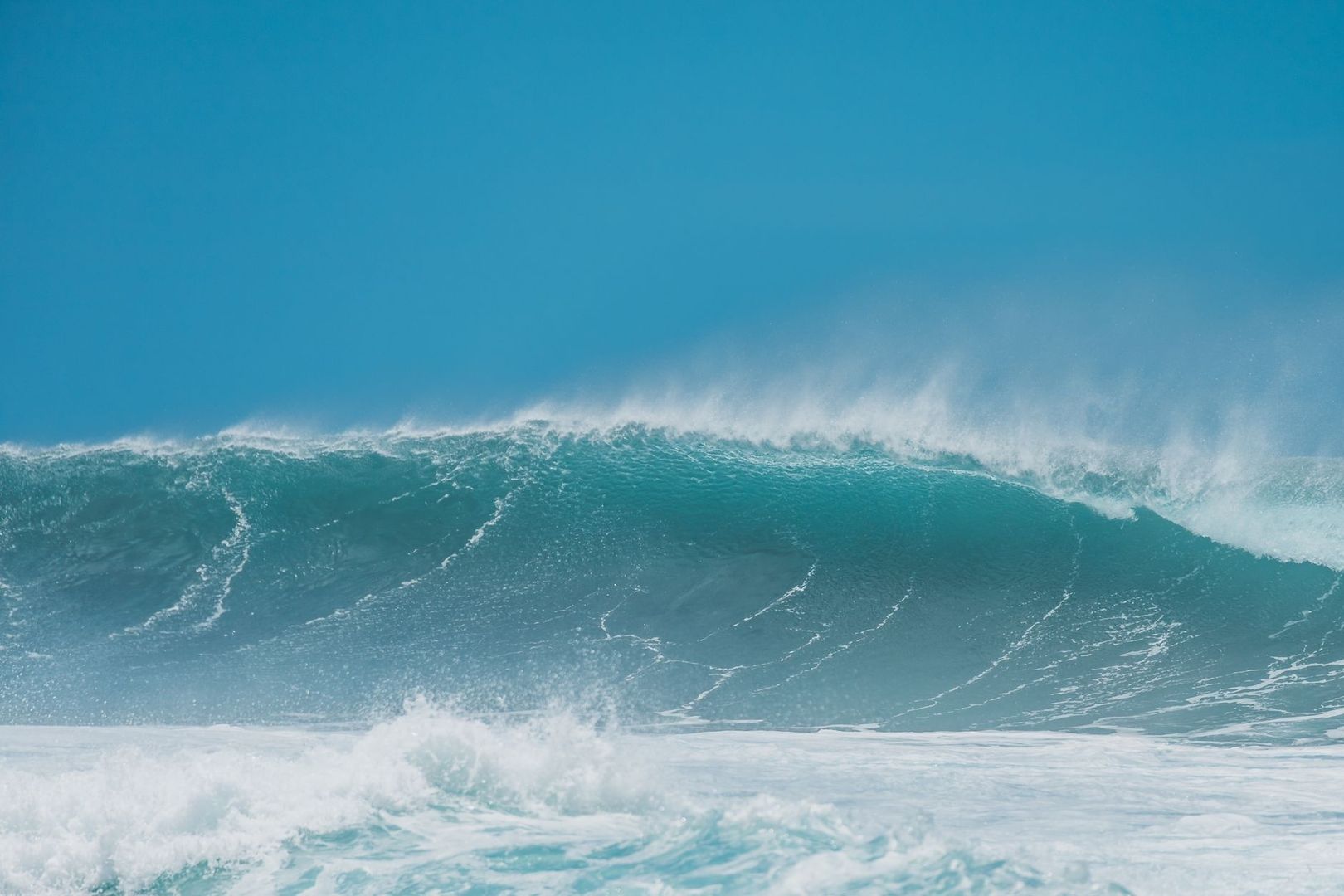
Deep-water wave theory helps explain why seconds matter so much. For a regular wave, energy density is strongly related to wave height squared, so a wave twice as high contains roughly four times the energy density, all else being equal. But the rate at which that energy travels is also important. In deep water, wave speed rises with wavelength, and wavelength increases with period. Wave power per metre of crest therefore increases with both wave energy and period, making a long-period swell substantially more influential than its height alone might suggest.
Consider a three-foot swell arriving every seventeen seconds and a six-foot swell arriving every seven seconds. The taller wave has greater height-based energy density, but the seventeen-second swell travels much faster and carries its energy in a longer, more organized wave train. When both meet a coastline, the longer-period pulse can produce powerful, well-spaced sets, draw deeply over reefs and sandbars, and create steep, defined faces. The six-foot windswells may look imposing from the beach, yet arrive as a crowded, uneven field of waves that lose shape quickly and offer less predictable rides.
These comparisons are based on deep-water conditions and should not be treated as a guarantee of breaking-wave size. Forecast models also provide regional estimates, while individual beaches respond differently to direction, tide, wind, and seabed contour. Even so, period is an essential energy multiplier. It provides context that a height figure cannot supply, particularly when planning a destination surf session several days in advance.
| Characteristic | Windswell | Groundswell |
|---|---|---|
| Typical source | Nearby or regional wind | Distant, powerful storms |
| Common period | Short, often five to seven seconds | Long, often ten seconds or more |
| Surface appearance | Choppy, close-spaced, less organized | Clean, widely spaced, clearly defined sets |
| Underwater reach | Shorter wavelength and shallower influence | Longer wavelength and deeper influence |
| Typical surf character | Quick, softer, and sometimes messy | Faster, more powerful, and more structured |
How Coastal Bathymetry Shapes the Breaking Wave
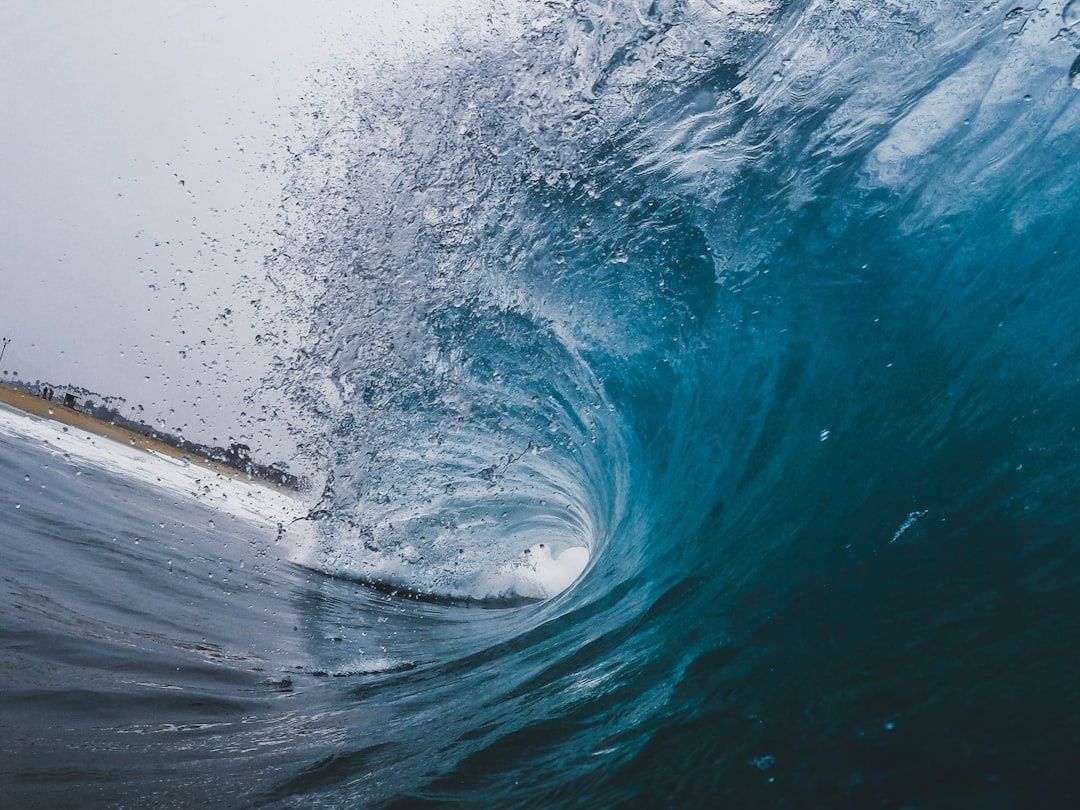
Bathymetry, the shape and depth of the seabed, determines how incoming energy is transformed near shore. As a deep-reaching groundswell enters shallower water, it begins to feel the bottom. Friction and changing water depth slow the lower part of the wave, while energy is compressed upward and forward. The wave shoals, increasing in height and steepness until it reaches the point where it breaks.
The seabed rarely changes evenly across a coastline. A sandbar may focus energy into a single peak, a reef may create a reliable breaking section, and a rocky point may bend incoming waves around its contours. This bending is called refraction. Long-period swells, with their broad underwater reach, interact particularly strongly with these features. They may wrap around a headland, organize along a reef shelf, or converge over a bank to create a clean wall and, under the right conditions, a hollow barrel.
The shape of the bottom also influences the manner of breaking. A gradual sandy slope generally encourages a spilling wave, which crumbles progressively from the crest and releases energy in a forgiving way. A steeper transition can produce a plunging breaker that pitches forward, forming a hollow face and demanding more precise timing. On very steep nearshore bottoms, water can surge up the shoreline without producing a sustained, rideable face. Tide can alter this equation further, causing a beach break to shift from soft and spilling at one stage to faster and more plunging at another.
- Spilling breakers suit learning and relaxed riding because the crest releases energy gradually.
- Plunging breakers create steeper faces and barrels, rewarding accurate positioning and suitable equipment.
- Surging waves rush up steep shores and can be hazardous because they may not form a rideable face.
Curating Your Ideal Ocean Session Through the Numbers
The most comfortable approach is to treat period as a planning tool rather than an isolated promise of quality. A long-period swell may be ideal for an experienced surfer at a reef or point, yet close out a shallow beach break or create dangerous currents for an unfamiliar visitor. A mid-range swell can be more forgiving for longboarders, families, and guests seeking an unhurried morning on the water. Beginners should pay close attention to both the interval and the local break”s reputation, since even modest-looking long-period waves can arrive with surprising force.
Before reserving a surf retreat or scheduling an early paddle-out, compare several forecast elements and then confirm the picture with local observations. Forecast accuracy is generally strongest over the next few days, while distant predictions can change as storm tracks and wind fields evolve. Forecast resources such as surf forecast guidance can help clarify how height, period, direction, wind, and tide work together. A polished coastal itinerary leaves room for this flexibility, allowing a sunrise surf window, a calm alternative activity, and restorative post-surf downtime if conditions shift.
- Read height and period together. Identify whether the swell is small but long-period, large but short-period, or somewhere between those extremes.
- Check swell direction. Compare the incoming angle with the orientation of the beach, reef, or point, since a powerful swell can miss an exposed coastline entirely.
- Review wind conditions. Light offshore winds may groom the surface, while strong onshore winds can obscure the underlying swell with chop.
- Study the tide and bottom type. Note whether the break improves over a sandbar, reef, or point at high, mid, or low tide.
- Match conditions to ability and equipment. Long-period, plunging waves may call for advanced skills and a more suitable board, while softer mid-range waves can make longboarding or instruction more enjoyable.
- Compare the chart with live evidence. Look at webcams, buoy readings, and local advice before entering, especially when a distant storm has generated an unusually energetic swell.
Step Onto the Shoreline with Masterful Fluency
Reading seconds alongside feet transforms a forecast from a flat numerical snapshot into a narrative of the sea. Height suggests the scale of the surface, while period reveals the pulse beneath it: how far the energy has traveled, how deeply it reaches, how quickly it moves, and how forcefully it may respond to the coastline. Direction, wind, tide, and bathymetry complete the interpretation, turning a general prediction into a more practical understanding of one particular beach.
Next time the horizon begins to lift in long, measured lines, consider the distant storm that set those waves in motion and the underwater landscape waiting to shape them. That awareness brings more than technical confidence. It supports safer choices, better-timed sessions, and a more thoughtfully planned seaside retreat, from an early paddle-out to quiet beach hours and comfortable sunset dining. The ideal ocean experience is rarely found by chasing the largest number. It is found by understanding the rhythm.
